

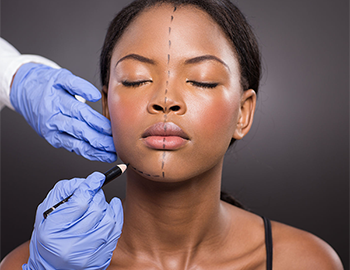
Botox vs. Dermal Fillers: Quick Comparison
The Key Difference: Botox is a muscle-relaxing neurotoxin designed to stop dynamic wrinkles caused by repetitive facial expressions (like forehead lines and crow’s feet). Dermal Fillers are volume-restoring hyaluronic acid gels designed to plump up static wrinkles, hollow cheeks, thin lips, and restore facial volume lost to aging.
- Smooth forehead furrows & frown lines
- Soften crow’s feet around the eyes
- Prevent dynamic facial wrinkles from deepening
- Slim jaw muscles (masseter reduction)
- Enhance lip volume & redefine lip borders
- Restore sunken cheeks & contour jawlines
- Fill smile lines (nasolabial folds & marionette lines)
- Smooth tear troughs under the eyes
As medical aesthetics continue to advance, non-surgical facial rejuvenation has become the preferred choice for women and men seeking a refreshed, youthful appearance without the risks or extended downtime of cosmetic surgery. Among all non-invasive treatments, Botox® and Dermal Fillers stand as the two most popular aesthetic procedures performed worldwide.
However, at Refine Skin & Body Clinic, one of the most frequent questions our aesthetic physicians and dermatologists answer during patient consultations is: "Botox vs Dermal Fillers — which one should I choose?" While both treatments effectively reduce signs of aging and enhance facial harmony, they operate through completely different biological mechanisms, treat distinct types of wrinkles, and serve separate aesthetic purposes.
In this definitive guide, our medical team breaks down everything you need to know about Botox and dermal fillers — including how each works, their primary treatment areas, longevity, safety profiles, cost considerations, an AEO comparison framework, and 8 frequently asked questions.
What Is Botox and How Does It Work?
Botox® (Botulinum Toxin Type A) is a purified medical protein that temporarily blocks nerve signals to specific facial muscles. When injected into targeted hyperactive muscles, Botox prevents those muscles from contracting forcefully. As the underlying muscle relaxes, the skin overlying it smooths out, significantly softening expression lines.
When evaluating Botox treatment in Kampala, understanding the biological difference between dynamic wrinkles and static wrinkles is essential for selecting your ideal anti-aging procedure:
Dynamic Wrinkles vs. Static Wrinkles
To understand why Botox is recommended for certain facial areas, it is essential to distinguish between dynamic wrinkles and static wrinkles:
- Dynamic Wrinkles: These are lines that appear only when your facial muscles contract — for example, when you squint, frown, smile, or raise your eyebrows. Over years of repetitive facial movements, dynamic lines gradually etch deeper into the skin. Botox is the gold standard treatment for dynamic wrinkles.
- Static Wrinkles: These are permanent lines and folds that remain visible on your face even when your facial muscles are completely at rest. Static wrinkles result from collagen degradation, sun damage, and age-related subcutaneous fat loss. Dermal fillers are primarily used to treat static wrinkles.
Primary Treatment Areas for Botox
Upper Facial Wrinkles
- Glabellar lines ("11" frown lines between brows)
- Horizontal forehead lines
- Crow’s feet (fine lines at outer eye corners)
- Bunny lines (creases on sides of the nose)
Facial Sculpting & Medical Uses
- Masseter muscle reduction (jaw slimming & teeth grinding relief)
- Nefertiti neck lift & platysmal band smoothing
- Gummy smile correction
- Hyperhidrosis (excessive underarm sweating)
Onset & Longevity: The results of Botox are not instantaneous. Initial softening begins within 3 to 5 days, with full clinical results appearing at 10 to 14 days post-injection. Botox results typically last between 3 to 4 months, after which muscle activity gradually returns, and follow-up maintenance sessions are recommended.
What Are Dermal Fillers and How Do They Work?
Dermal Fillers are injectable smooth gels formulated to restore lost volume, smooth deep facial folds, enhance facial contours, and hydrate skin from within. Unlike Botox, which relaxes muscles, dermal fillers act as a supportive matrix underneath the skin to physically lift and plump tissue.
For patients seeking Dermal Fillers Treatment in Kampala, the vast majority of modern premium dermal fillers used at Refine Clinic — such as Juvederm®, Restylane®, and Belotero® — are composed of Hyaluronic Acid (HA). Hyaluronic acid is a naturally occurring sugar molecule in human skin that attracts and holds up to 1,000 times its weight in water, maintaining skin elasticity and volume.
Primary Treatment Areas for Dermal Fillers
Lip Enhancement
Adds natural volume, defines lip borders (vermilion border), corrects asymmetry, and smooths smoker’s lines.
Cheek & Mid-Face Lift
Restores youthful malar cheek volume, lifts sagging lower face tissue, and projects high cheekbones.
Nasolabial & Marionette Folds
Fills deep smile lines running from the nose to mouth corners, and marionette lines down to the chin.
Onset & Longevity: The volume-enhancing results of Hyaluronic Acid fillers are visible immediately upon injection. Depending on the density of the filler gel, treatment area, and metabolic rate, dermal filler results last between 6 to 18 months.
Head-to-Head Comparison: Botox vs. Dermal Fillers
| Feature | Botox® (Neurotoxin) | Dermal Fillers (Hyaluronic Acid) |
|---|---|---|
| Primary Function | Relaxes hyperactive facial muscles | Restores lost volume & plumps tissues |
| Wrinkle Type Treated | Dynamic wrinkles (expression lines) | Static wrinkles & structural facial hollows |
| Result Onset Time | 3 to 5 days (Full effect at 14 days) | Immediate results post-procedure |
| Average Duration | 3 to 4 months | 6 to 18+ months |
Combining Botox & Fillers: The "Liquid Facelift"
Combining both treatments in a customized protocol — often referred to as a "Liquid Facelift" — delivers superior, total-face rejuvenation.
Safety Profile, Side Effects & Medical Guidance
Both Botox and Hyaluronic Acid dermal fillers possess exceptional safety track records when administered by qualified medical doctors.
Frequently Asked Questions (FAQs)
Q1: Can I get Botox and dermal fillers done during the same appointment?
Yes, absolutely. It is safe and common practice to receive Botox and dermal fillers in a single session.
Q2: Which treatment lasts longer: Botox or Dermal Fillers?
Dermal Fillers last longer. While Botox lasts 3-4 months, HA fillers last 6 to 18 months.
Q3: Are dermal fillers more painful than Botox injections?
Both treatments involve minimal discomfort. Topical numbing cream makes the process comfortable.
Q4: Can dermal fillers be dissolved if I am unhappy with the result?
Yes. Hyaluronic Acid fillers can be instantly dissolved using Hyaluronidase enzyme.
Q5: Will Botox make my face look frozen or expressionless?
No, not when administered by an experienced doctor. Micro-dosing preserves natural expressions.
Q6: What is the ideal age to start getting Botox or dermal fillers?
Many start Preventative Botox in their mid-to-late 20s, and fillers in their late 20s or 30s.
Q7: What is the downtime and recovery period after Botox vs. fillers?
Both procedures have zero required social downtime. You can return to work immediately.
Q8: How do I choose between Botox and fillers for my specific face?
Upper face lines from expression respond to Botox; lower face volume loss responds to Fillers.
Final Thoughts: Achieving Natural, Youthful Rejuvenation
The goal of aesthetic treatment at Refine Skin & Body Clinic is to enhance your unique facial harmony — leaving you looking refreshed, confident, and beautifully rejuvenated.
Dr. Henry Owiny
Aesthetic Physician, Refine Clinic
Specialized medical practitioner dedicated to providing evidence-based healthcare, medical aesthetics, and personalized patient care.