

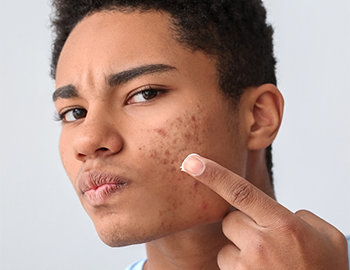
How to Choose the Right Treatment for Acne Scars? Quick Answer
Direct Answer: To choose the right acne scar treatment, you must first identify your exact scar type, depth, and skin tone (Fitzpatrick scale). Pitted ice-pick scars respond best to TCA CROSS; wide boxcar scars heal fastest with Fractional CO2 Laser; tethered rolling scars require Subcision paired with RF Microneedling or Dermal Fillers; and raised hypertrophic scars require steroid injections. For darker complexions, RF Microneedling and Subcision offer maximum scar remodeling with zero risk of post-inflammatory hyperpigmentation.
- Deep Ice-Pick Scars: TCA CROSS or Punch Excision
- Depressed Boxcar Scars: Fractional CO2 Laser Resurfacing
- Tethered Rolling Scars: Subcision + RF Microneedling
- Raised Keloid Scars: Intralesional Steroid Injections
- Skin Tone Safety: RF Microneedling for melanin-rich African skin
- Downtime Window: 1–3 days (RF) vs. 7–10 days (CO2 Laser)
- Combination Approach: Multi-modality therapy yields up to 80% improvement
- Active Acne Status: Clear active breakouts before scar therapy
Acne is frustrating enough when active, but the persistent scars it leaves behind can impact your self-confidence long after breakouts have cleared. With dozens of advertised dermatological options—from fractional lasers and microneedling to chemical peels and subcision—choosing the right treatment for your acne scars can feel overwhelming.
The most critical fact every patient must understand is that no single laser or treatment works for every type of acne scar. Acne scars vary dramatically in structural depth, tissue composition, and tethering. If you are researching Acne Scar Removal treatment in Uganda, understanding how to match your specific scar profile to the correct clinical technology is the secret to achieving dramatic, permanent skin smoothing.
Understanding the physiological mechanics of Acne scarring mechanisms enables you and your dermatologist to design a customized multi-modality treatment plan that safely delivers maximum structural collagen remodeling.
Step 1: Identify Your Specific Type of Acne Scar
Before selecting a procedure, your dermatologist will perform a high-magnification skin assessment to classify your scars into one of two major categories: Atrophic (depressed) scars or Hypertrophic (raised) scars.
1. Ice-Pick Scars (Deep & Narrow Pits)
Appearance: Small, steep-sided, V-shaped punctures that look like the skin was pierced by an ice pick. They extend deep into the lower dermis and subcutaneous layer.
Best Treatment: TCA CROSS or Punch Excision. Because ice-pick scars are extremely deep and narrow, standard resurfacing lasers cannot reach their base without damaging surrounding healthy tissue. TCA CROSS (Chemical Reconstruction of Skin Scars) involves depositing high-concentration Trichloroacetic Acid directly inside the pit to trigger localized focal collagen synthesis that pushes the scar base upward.
2. Boxcar Scars (Broad Depressions with Sharp Edges)
Appearance: Round, oval, or rectangular depressions with sharply defined, vertical edges, resembling chickenpox scars. They can be shallow (0.1–0.5 mm) or deep.
Best Treatment: Fractional CO2 Laser Resurfacing & Deep Chemical Peels. Shallow boxcar scars respond exceptionally well to Fractional CO2 laser therapy, which ablates the sharp vertical edges and stimulates dermal collagen to level out the depression. Deep boxcars benefit from combining laser ablation with subcision.
3. Rolling Scars (Wave-Like Textural Indentations)
Appearance: Wide, shallow depressions that create an uneven, undulating, "wave-like" texture across the cheeks and jawline.
Best Treatment: Subcision + RF Microneedling or Dermal Fillers. Rolling scars are caused by thick, fibrous collagen bands in the sub-dermis pulling the surface skin downward. Lasers alone cannot smooth rolling scars because they cannot sever these deep fibrous tethers. Subcision physically releases the tethers, while RF Microneedling or hyaluronic acid fillers restore volume underneath.
4. Hypertrophic & Keloid Scars (Raised, Thick Tissue)
Appearance: Firm, raised bumps of excess scar tissue that form above the skin surface, commonly along the jawline, chest, and shoulders.
Best Treatment: Intralesional Corticosteroid Injections & Laser Therapy. Raised scars result from overproduction of collagen during healing. Exfoliating or ablative lasers can worsen keloids. Instead, dermatologists inject localized steroids to break down dense collagen bundles and flatten the scar.
5. Post-Inflammatory Hyperpigmentation (PIH) & Erythema (PIE)
Appearance: Flat brown, purple, or red marks left behind after an acne pimple heals. Technically, these are post-acne marks rather than true structural scars.
Best Treatment: Medical Chemical Peels & Pigment Lasers. PIH responds rapidly to AHA/BHA chemical peels, Mandelic acid, and 1064nm Nd:YAG laser therapy, clearing surface melanin within 3 to 6 sessions.
| Acne Scar Type | Structural Profile | Gold-Standard Treatment | Secondary Options | Expected Downtime |
|---|---|---|---|---|
| Ice-Pick Scars | Narrow, deep V-shaped pits | TCA CROSS (70%–100%) | Punch Excision, Microneedling | 3 – 5 days (Scabbing) |
| Boxcar Scars | Broad pits with sharp edges | Fractional CO2 Laser | Medium TCA Peels, RF Microneedling | 5 – 7 days (Peeling) |
| Rolling Scars | Tethered wave-like indentations | Subcision Therapy | RF Microneedling, Fillers | 2 – 4 days (Mild swelling) |
| Keloid / Hypertrophic | Raised thick collagen lumps | Steroid Injections | Silicone Sheeting, Vascular Laser | 0 – 1 day (Zero downtime) |
Step 2: Compare the Top Clinical Acne Scar Modalities
Once your scar type is identified, choose your treatment modality based on clinical efficacy, downtime tolerance, and budget:
1. Fractional CO2 Laser Resurfacing
Best For: Moderate-to-severe boxcar scars, rough texture, and general skin tightening.
Fractional CO2 lasers deliver microscopic columns of thermal light energy that vaporize damaged scar tissue while leaving surrounding tissue intact. This triggers intense neocollagenesis (new collagen creation) over the following 3 to 6 months, smoothing out boxcar borders and lifting depressed skin. Downtime: 5 to 10 days of redness and micro-flaking.
2. Radiofrequency (RF) Microneedling
Best For: Rolling scars, mild boxcars, and safe treatment of dark skin complexions.
RF Microneedling combines physical micro-punctures with gentle radiofrequency heat emitted directly at precise dermal depths. Because energy is delivered under the epidermis, it bypasses surface pigment, making it 100% safe for African skin tones without risk of hyperpigmentation. Downtime: 1 to 3 days of mild pinkness.
3. Subcision Therapy
Best For: Deeply tethered rolling scars and severe indentations.
During subcision, a dermatologist inserts a specialized Nokor needle beneath the skin under local anesthesia. Moving the needle maneuverably severs the tough fibrous tethers binding the scar to underlying tissue. Once released, the skin lifts immediately, and blood pool accumulation under the scar stimulates natural collagen growth. Downtime: 2 to 5 days of minor bruising.
4. TCA CROSS (Chemical Reconstruction of Skin Scars)
Best For: Deep ice-pick scars and narrow boxcar pits.
A micro-applicator places high-concentration TCA (70%–100%) inside individual deep scar pits. The localized acid causes a controlled white frost, prompting rapid collagen synthesis that fills the pit from the inside out over 3 to 6 sessions. Downtime: 3 to 5 days of small scab formation.
Step 3: Consider Your Skin Tone & Fitzpatrick Type
Skin tone is one of the most vital considerations when selecting an acne scar procedure. Melanin-rich skin (Fitzpatrick Types IV through VI) contains highly reactive melanocytes. Aggressive thermal lasers can cause post-inflammatory hyperpigmentation (PIH) or hypopigmentation if used incorrectly.
Safe Treatments for Melanin-Rich African Skin
For darker complexions, dermatologists prioritize modalities that bypass surface epidermal melanin: RF Microneedling, Subcision, 1064nm Nd:YAG Laser, TCA CROSS, and Mandelic Acid Peels. When CO2 laser is required, lower energy parameters paired with long-pulse conservative settings guarantee safe, flawless scar removal.
Step 4: The Power of Multi-Modality Combination Therapy
Most patients do not have just one type of acne scar; cheeks typically present a mix of ice-pick pits, rolling tethers, and boxcar depressions. Clinical research proves that combining treatments yields far superior results than relying on a single device:
- Session 1: Subcision to untether rolling scars + TCA CROSS inside deep ice-pick pits.
- Session 2 (4 Weeks Later): RF Microneedling or Fractional CO2 Laser to smooth overall surface texture and build dermal collagen.
- Session 3 (8 Weeks Later): Follow-up laser touch-up or hyaluronic acid filler for stubborn residual depressions.
Frequently Asked Questions
1. Can acne scars be removed 100% permanently?
While no medical treatment can restore skin to 100% pre-acne perfection, advanced clinical multi-modality treatments (combining CO2 laser, subcision, and RF microneedling) achieve 50% to 80%+ permanent improvement in scar depth and overall texture.
2. What is the fastest treatment for deep pitted acne scars?
For deep ice-pick scars, TCA CROSS is the fastest targeted treatment. For tethered rolling scars, Subcision paired with dermal fillers provides immediate structural lifting, followed by long-term collagen remodeling over 3 to 6 months.
3. Is CO2 laser scar removal safe for dark African skin complexions?
Yes, Fractional CO2 laser is safe for darker skin when performed by an experienced dermatologist using conservative fluence settings and proper pre-treatment skin conditioning. Alternatively, RF Microneedling offers equivalent scar remodeling with zero pigment risk.
4. How many sessions of acne scar treatment will I need?
Most patients require a series of 3 to 5 treatment sessions spaced 4 to 6 weeks apart to achieve optimal collagen stimulation and smooth surface alignment.
5. What is the difference between active acne marks and real acne scars?
Acne marks (Post-Inflammatory Hyperpigmentation) are flat brown or red discolorations that fade over time with chemical peels. True acne scars are structural changes in skin depth (indentations or raised tissue) caused by damaged dermal collagen.
6. Can topical creams or serums fix pitted acne scars?
Topical creams and serums (like Retinol or Vitamin C) can improve surface tone and minor discoloration, but they cannot rebuild lost dermal collagen or sever tethered fibrous bands beneath pitted acne scars. Clinical procedures are required for structural scars.
7. Is subcision treatment painful, and what is the recovery time?
Subcision is performed under local tumescent anesthesia, making the procedure virtually painless. Patients may experience mild swelling or minor bruising lasting 2 to 5 days, after which normal activities can be resumed immediately.
8. Where can I consult an expert dermatologist for acne scar removal in Uganda?
You can book a comprehensive skin consultation and personalized scar treatment plan for Acne Scar Removal treatment in Uganda with a qualified dermatologist at Refine Skin & Body Clinic in Kampala.