

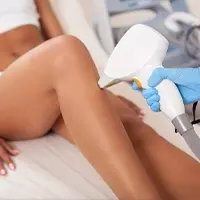
Is Laser Hair Removal Safe for Darker Skin Tones? Quick Answer
Direct Answer: Yes, laser hair removal is 100% safe and effective for darker skin tones (Fitzpatrick Skin Types IV to VI) when performed using advanced long-pulse 1064 nm Nd:YAG laser technology operated by qualified medical professionals. Older laser systems (like IPL or Ruby lasers) targeted surface melanin indiscriminately, carrying risks of burns or hyperpigmentation on dark skin. Modern 1064nm lasers bypass epidermal melanin to bypass the skin surface and target the deep hair follicle directly, making laser hair removal safety for Black skin fully proven, comfortable, and highly successful.
- Nd:YAG 1064 nm Wavelength: Deepest penetration with minimal epidermal absorption
- Advanced Contact Cooling: Protects the outer skin layer during pulses
- Professional Consultation: Mandatory patch testing & skin analysis
- Customized Fluence & Pulse Width: Tailored specifically for melanin-rich skin
- Eliminates painful ingrown hairs and razor bumps
- Cures chronic pseudofolliculitis barbae (PFB)
- Smooths skin texture and reduces post-acne dark spots
- Long-term permanent hair reduction without daily shaving
For decades, a lingering myth has haunted the aesthetic dermatology industry: that laser hair removal is only safe or effective for individuals with fair skin and dark hair. If you have melanin-rich skin, an African, South Asian, or Mediterranean heritage, you may have been warned that lasers could cause burns, scarring, or severe discoloration on your skin.
Fortunately, medical technology has evolved dramatically. Today, with the guidance of a qualified Dermatologist in Uganda and state-of-the-art laser platforms, laser hair reduction is not only completely safe for dark skin tones—it is often the single most effective medical solution for chronic razor bumps, ingrown hairs, and skin irritation.
If you are considering Laser Hair Removal in Uganda, this comprehensive guide will explain the physics behind laser technology, why older methods failed darker skin, how modern 1064nm Nd:YAG lasers safely target hair follicles, and what steps you should take to ensure flawless, silky-smooth results.
1. Understanding the Science: How Laser Hair Removal Works
To understand why skin tone matters during laser treatments, it helps to understand the fundamental principle of laser dermatology: selective photothermolysis.
When a laser device emits a beam of light, that light energy is absorbed by a specific target in the skin, known as a chromophore. In hair removal treatments, the primary target chromophore is melanin—the pigment that gives both your hair and your skin its color.
When the laser light hits the melanin inside the hair shaft, it converts into intense thermal energy (heat). This heat travels down the hair follicle, damaging the bulb and stem cells responsible for hair growth. Over a series of sessions, the hair follicle loses its ability to regenerate, resulting in permanent hair reduction.
The Fitzpatrick Scale & Melanin Distribution
Dermatologists classify human skin into six categories using the Fitzpatrick scale, ranging from Type I (very fair, always burns) to Type VI (deeply pigmented, dark brown or black skin).
In lighter skin (Fitzpatrick Types I–III), there is a sharp contrast between pale skin and dark hair follicles. The laser easily distinguishes between the two. However, in Fitzpatrick skin types IV-VI, both the epidermis (outer skin layer) and the hair follicle contain high concentrations of melanin.
2. Why Older Lasers Were Risky for Darker Skin Tones
Early laser devices developed in the 1990s and 2000s (such as Ruby lasers at 694 nm, Alexandrite lasers at 755 nm, and Intense Pulsed Light or IPL systems) relied on short wavelengths that were heavily absorbed by surface melanin.
When applied to dark skin, these shorter wavelengths could not distinguish between the melanin in the skin and the melanin in the hair follicle. As a result, the outer skin layer absorbed too much heat energy, leading to complications such as:
- Epidermal Burns & Blistering: Excessive thermal buildup in the upper skin layers.
- Post-Inflammatory Hyperpigmentation (PIH): Dark patches or spots left behind after skin inflammation.
- Hypopigmentation: Permanent or temporary loss of skin pigment (white spots) caused by damaged melanocytes.
- Scarring: Structural skin damage from improper energy settings.
Why IPL Is NOT a True Laser
Intense Pulsed Light (IPL) is frequently advertised as laser hair removal, but it uses broad-spectrum scattered light rather than a single focused wavelength. IPL is unsafe for Fitzpatrick Types IV to VI because its scattered energy is heavily absorbed by epidermal pigment. Always ensure your clinic uses medical-grade lasers rather than IPL.
3. The Game Changer: 1064 nm Nd:YAG Laser Technology
The revolution in safe hair removal for darker skin arrived with the development of the 1064 nm Nd:YAG laser (Neodymium-doped Yttrium Aluminum Garnet).
What makes the 1064 nm wavelength so uniquely safe for melanin-rich skin?
A. Deep Wavelength Penetration
The 1064 nm wavelength is significantly longer than older laser types. Because longer light waves bypass the melanin in the upper epidermal layer, the energy passes safely through the skin surface without heating up the surrounding tissue. It travels straight to the deep dermis where the root of the hair follicle resides.
B. Reduced Melanin Absorption Ratio
Because 1064 nm light has a lower absorption coefficient in surface melanin, it reduces the risk of overheating dark skin while retaining enough energy to destroy the deep blood supply (papilla) supporting the hair follicle.
C. Advanced Epidermal Cooling Technology
Modern medical laser devices incorporate active contact cooling systems (such as sapphire cooling tips or cryogen sprays) that continuously chill the outer skin layer immediately before, during, and after each laser pulse. This ensures the skin surface remains cool and comfortable throughout the procedure.
| Laser Wavelength | Wavelength (nm) | Best For Skin Types | Safety Level for Dark Skin |
|---|---|---|---|
| Alexandrite | 755 nm | Fitzpatrick I - III | High risk of burns/PIH |
| Diode | 808 - 810 nm | Fitzpatrick I - IV | Moderate safety (experienced hands) |
| Nd:YAG | 1064 nm | Fitzpatrick I - VI (All skin tones) | Gold Standard Safety (100% Safe) |
4. Major Benefits of Laser Hair Removal for Darker Skin Tones
Beyond eliminating unwanted body and facial hair, laser hair removal provides life-changing medical and aesthetic benefits for individuals with curly hair textures or melanin-rich complexions:
A. Curing Pseudofolliculitis Barbae (Razor Bumps)
Curled or coarse hair strands often curve back into the skin after shaving, causing painful inflammatory papules known as folliculitis & ingrown hairs or pseudofolliculitis barbae (PFB). This is particularly common on the beard area in men and the bikini line or underarms in women. By destroying the hair follicle at its root, laser treatment permanently stops ingrown hairs from forming.
B. Fading Dark Spots & Hyperpigmentation
Frequent shaving, waxing, or plucking causes chronic micro-trauma, leaving behind long-lasting dark marks (PIH). By eliminating the need for razors or hot wax, laser hair removal allows the skin barrier to heal and dark spots to fade over time.
C. Smoother Skin Texture
Say goodbye to stubble, "strawberry legs" (dark pore spots), and rough skin texture. Laser energy refines pore structure and leaves the treated area feeling silky smooth.
5. What to Expect During Treatment: Step-by-Step
When you choose a professional clinic for your laser treatments, your safety and comfort are prioritized at every step:
- Patch Test & Skin Evaluation: A qualified practitioner evaluates your Fitzpatrick skin type, medical history, and performs a small test patch to ensure optimal energy parameters before treating larger areas.
- Pre-Treatment Shaving: The area is shaved 24 hours prior to treatment so that energy is directed underground into the root rather than burning surface hair.
- Eye Protection & Cooling Gel: Protective eyewear is provided, and a cooling gel or active cold air spray is applied to comfort the skin.
- Quick Laser Session: Pulses feel like a slight rubber-band snap accompanied by a cooling sensation. Small areas like the chin take less than 10 minutes.
- Post-Care Soothing: A soothing aloe vera gel or soothing anti-inflammatory lotion is applied post-treatment.
6. Pre- and Post-Laser Care Guidelines for Darker Skin
To maximize your results and maintain optimal skin safety, follow these essential protocols:
DO's
- Shave the treatment area 24 hours before your appointment.
- Apply broad-spectrum SPF 50 sunscreen daily on exposed treated areas.
- Keep the area hydrated with gentle, fragrance-free moisturizers.
- Complete all recommended sessions (usually 6 to 8 sessions spaced 4-6 weeks apart).
DON'Ts
- Do NOT wax, pluck, or thread for 4 weeks before or between sessions.
- Do NOT use active exfoliants (AHA/BHA, Retin-A) 3 days before laser treatment.
- Avoid hot saunas, steam rooms, or strenuous workouts for 24 hours post-session.
- Never expose treated skin to intense direct sunlight without sunscreen.
Frequently Asked Questions (FAQs)
1. Is laser hair removal safe for dark African skin tones?
Yes, absolutely. Using a 1064 nm Nd:YAG laser wavelength, hair removal is completely safe for dark African skin tones (Fitzpatrick Types IV to VI). The long wavelength bypasses surface melanin to target the deep follicle without causing burns or hyperpigmentation.
2. How many sessions are needed for permanent hair reduction?
Most patients require between 6 to 8 sessions spaced 4 to 6 weeks apart. Hair grows in cyclical phases (anagen, catagen, telogen), and lasers can only target hair in the active growth (anagen) phase.
3. Does laser hair removal cause dark spots or hyperpigmentation?
When performed with improper settings or older laser types (like IPL), there is a risk of hyperpigmentation. However, when treated with a 1064nm Nd:YAG laser by experienced medical practitioners, laser hair removal actually helps clear existing dark spots caused by razor bumps.
4. Does laser hair removal hurt on dark skin?
Most patients report only mild discomfort, often described as a brief rubber-band snap accompanied by a cooling sensation. Advanced contact cooling built into modern laser machines keeps the treatment very tolerable.
5. Can laser hair removal treat facial razor bumps in men?
Yes! Laser hair removal is the gold-standard treatment for pseudofolliculitis barbae (PFB) or chronic neck razor bumps in men. It permanently thins out coarse beard hair, stopping painful ingrown bumps completely.
6. Can I shave between laser hair removal sessions?
Yes, shaving between sessions is completely permitted. However, you must avoid waxing, plucking, threading, or epilating, as these methods pull out the hair root that the laser needs to target.
Experience Safe, Flawless Laser Hair Removal at Refine Clinic
Ready to say goodbye to painful razor bumps, dark spots, and daily shaving? Consult our medical aesthetic team at Refine Clinic for a personalized skin evaluation and safe 1064nm Nd:YAG laser treatments tailored for your skin tone.