

Rosacea vs Acne: How to Tell the Difference
Direct answer: Acne usually starts in the teens and includes blackheads or whiteheads, often on the face, chest and back. Rosacea usually starts after 30, stays on the central face, has no blackheads, and brings flushing, burning or stinging. On darker skin the redness can be hard to see, so warmth, stinging and bumps without blackheads are the key clues.
Blackheads and whiteheads point to acne; rosacea does not cause them.
Acne in the teens; rosacea usually between 30 and 50.
Steroid creams, which make rosacea significantly worse.
On darker skin, rosacea is easy to mistake for acne. The clues are in how your skin feels and behaves.
Rosacea and acne can both cause bumps and pus spots on the face, so they are easy to confuse. The difference matters, because several standard acne treatments can inflame rosacea, and the wrong cream can turn a mild problem into a stubborn one.
Rosacea is also under-recognised in darker skin. Most textbook photos show pink, flushed cheeks on light skin, but on brown and black skin the redness may look dusky or brown, or barely show at all. As a result, rosacea in darker skin is often missed or treated as acne for months.
What acne is, and what rosacea is
Acne
Acne starts in blocked hair follicles. Oil and dead skin cells plug the pore, forming comedones: blackheads (open) and whiteheads (closed). Inflammation, partly driven by bacteria that live in the follicle, then produces papules (small bumps), pustules (pus spots) and, in severe cases, deep cysts and nodules. Acne is often a result of hormones, genetics or certain medications.
Rosacea
Rosacea is a long-term inflammatory condition of the central face: cheeks, nose, chin and forehead. It is a chronic skin condition characterised by facial redness, swelling and visible blood vessels. Its exact cause is unknown, but it is not caused by poor hygiene. Oversensitive blood vessels and nerves, the skin’s immune response, tiny skin mites called Demodex and genes all seem to play a part. It takes several forms: persistent redness and flushing, acne-like bumps (papulopustular rosacea), skin thickening on the nose (phymatous rosacea), and eye irritation (ocular rosacea).
Rosacea vs acne at a glance
| Feature | Acne | Rosacea |
|---|---|---|
| Blackheads & whiteheads | Present: the hallmark | Absent |
| Usual age at start | Teens and twenties; adult acne common in women | Usually 30 to 50 |
| Where it appears | Face, forehead, chin & jaw; also chest, back & shoulders | Central face: cheeks, nose, chin & forehead |
| How it feels | Spots can be tender, but skin rarely stings | Burning, stinging, warmth & flushing; products often sting |
| Common triggers | Hormones, heavy oils & cosmetics, some medicines, steroid creams | Sun, heat, hot drinks, spicy food, alcohol, exercise, stress, harsh products |
| Eye involvement | No | Common: gritty, dry or burning eyes & swollen eyelid margins |
| What it can leave | Dark marks and scars | Dark marks, lasting redness or thickened skin |
Why rosacea is missed on darker skin
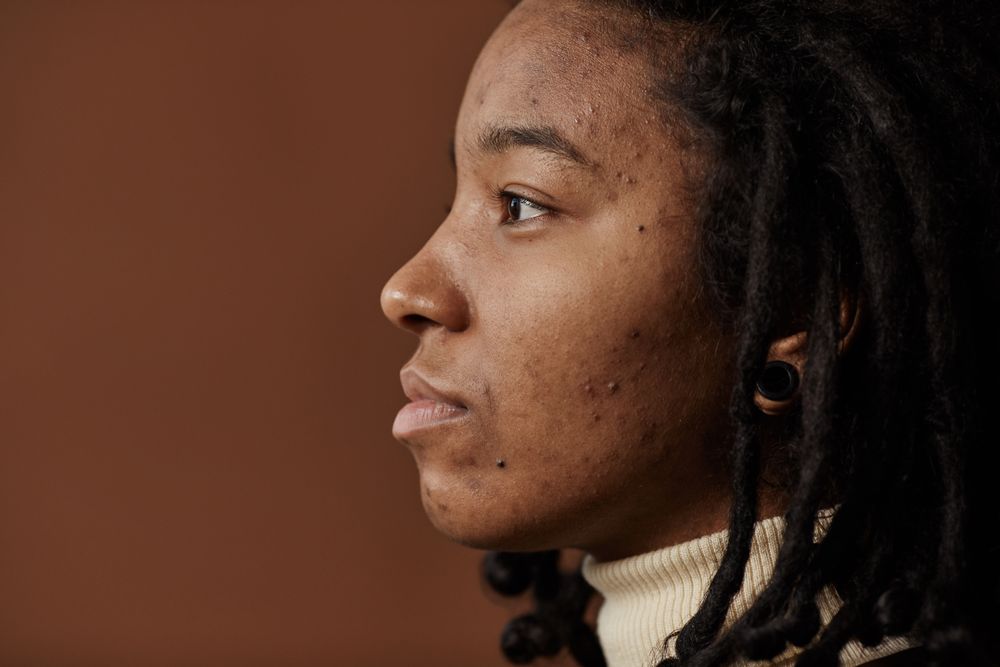
Redness is the classic sign of rosacea, but it is hard to see against brown or black skin. It may look dusky, purplish or darker brown, or not show at all. So pay attention to how your skin feels as well as how it looks. Clues include:
- Skin that feels hot, flushed or burning, especially with heat, sun, hot drinks or spicy food.
- Stinging when you apply sunscreen, moisturiser or acne products that others tolerate.
- Small bumps and pus spots on the cheeks, nose and chin, with no blackheads or whiteheads.
- Dry, rough or puffy-looking skin across the central face.
- Gritty, burning or dry eyes, or red, swollen eyelid margins.
A doctor can use good light and a dermatoscope to see fine blood vessels that are hard to spot by eye, and can rule out look-alikes — including a rosacea-like rash caused by steroid or lightening creams, seborrhoeic dermatitis, perioral dermatitis and lupus. A rash across the cheeks and nose that comes with joint pain, tiredness, mouth ulcers or sun sensitivity needs prompt medical review.
Why acne treatments can make rosacea worse
Important
Whiteheads and blackheads are the hallmark of acne, and they are absent in rosacea. Products designed to dry out oily, acne-prone skin can inflame rosacea-prone skin.
- Benzoyl peroxide washes and gels often sting and redden rosacea skin. A specially encapsulated form has been developed for rosacea, but that is a prescription decision, not a reason to use shop-bought products.
- Strong retinoid creams such as tretinoin can cause irritation and flushing. Doctors occasionally use low-dose isotretinoin tablets for stubborn rosacea, which is very different from applying acne creams yourself.
- Scrubs, alcohol toners, strong acid peels and steaming strip the skin barrier and trigger flares.
Why steroid creams make rosacea worse
Steroid creams, including clobetasol sold over the counter or hidden in lightening creams, can calm redness for a few days. With continued use they thin the skin, widen blood vessels and trigger a rosacea-like rash — and stopping them causes a rebound flare. Never put a steroid cream on your face unless a doctor has prescribed it for a specific reason and a set time. If you are using one now, see a doctor about stopping safely.
How each condition is treated
Acne
Treatment depends on type and severity: topical retinoids, benzoyl peroxide, azelaic acid, antibiotics (combined with benzoyl peroxide to limit resistance), hormonal treatment for some women, and isotretinoin for severe or scarring acne. At Refine, acne treatment covers hormone-related breakouts, inflamed spots, blackheads and whiteheads, cysts and nodules, and acne marks and scarring.
Rosacea
There is no cure, but rosacea can usually be well controlled. Care starts with a gentle cleanser, a moisturiser and a daily sunscreen that does not sting (often a tinted mineral one), plus learning your triggers. Doctors may prescribe creams such as ivermectin, metronidazole or azelaic acid, low-dose doxycycline tablets for inflamed bumps, and eye treatment for ocular rosacea. Light- or laser-based treatment for visible blood vessels needs cautious settings on darker skin, and your specialist will advise whether it suits you.
When you have both
Some people have acne and rosacea at the same time. The plan then favours treatments that suit both, such as azelaic acid, and introduces anything irritating slowly.
When to see a specialist at Refine
See a doctor if you are not sure which condition you have, if acne products make your skin burn or flush, if you have used steroid or lightening creams on your face, or if the skin on your nose is thickening. Seek care urgently for eye pain, blurred vision or sensitivity to light, which may need an eye specialist.
At Refine, acne and rosacea are treated under the care of Dr Chirag Kotecha, Aesthetic Physician, and no referral is required. The consultation is a conversation with a specialist about your goals and medical history, followed by a personalised plan. Bring every skin product and medicine you use, and say if you are pregnant, planning a pregnancy or breastfeeding, because retinoids, isotretinoin and doxycycline are not used in pregnancy.
At Refine in Kampala, in-clinic treatment for redness and rosacea starts from US, as does in-clinic treatment for active acne on the full face. Your exact cost depends on your plan and is confirmed at consultation.
Refine Skin & Body Clinic has branches at Forest Mall, Lugogo; Palm Village Mall, Kabalagala; and UMC Victoria Hospital Annex, Bukoto. In South Sudan, Refine Skin & Body Centre is on Airport Road, Juba. Book an appointment online.
Frequently asked questions
Can rosacea turn into acne?
Direct answer: No. They are different conditions, although you can have both at once. People often mean papulopustular rosacea, which has acne-like bumps but no blackheads.
Is rosacea common in Black skin?
Direct answer: It is diagnosed less often in darker skin, partly because the redness is harder to see. Rosacea does occur in Black and East African patients, and burning, stinging and bumps without blackheads are important clues.
Can I use benzoyl peroxide if I have rosacea?
Direct answer: Ordinary benzoyl peroxide washes and gels often irritate rosacea. Use one only if your doctor recommends a specific product, and stop if your skin burns or flushes.
Does rosacea leave dark marks?
Direct answer: It can. In darker skin, any inflammation, including rosacea bumps, can leave post-inflammatory hyperpigmentation (dark marks). Controlling inflammation early and wearing sunscreen daily help prevent them.
Is rosacea contagious?
Direct answer: No. Rosacea cannot spread from person to person, and it is not caused by poor hygiene. Scrubbing harder usually makes it worse.
Can rosacea be cured?
Direct answer: There is no cure yet, but most people can control it well. Knowing your triggers, using gentle skincare and daily sunscreen, and following your treatment plan keep flares fewer and milder.
What triggers rosacea flare-ups?
Direct answer: Common triggers are sun, heat, hot drinks, spicy food, alcohol, exercise, stress and harsh skincare. Triggers vary from person to person, so a simple diary of flares can help you find yours.
The bottom line
Blackheads point to acne. Flushing, stinging and bumps without blackheads point to rosacea, even when you cannot see redness on darker skin. Getting the diagnosis right matters, because acne products and steroid creams can make rosacea worse. Not sure which you have? Book a consultation at Refine and get a plan for the right condition.
Get the Right Diagnosis Today
Not sure if you have acne or rosacea? Our dermatology physicians at Refine Skin & Body Clinic in Kampala and Juba will give you a clear diagnosis and a personalised treatment plan.