

Keloids: Why They Form and Can They Be Removed?
Direct answer: Keloids form when the skin over-repairs a wound and keeps making scar tissue that spreads beyond the original injury. People of African descent are far more prone to them. Keloids can often be flattened, softened and controlled, usually with steroid injections combined with other treatments, but they frequently come back, so no treatment can promise they will stay gone.
People with darker skin, a family history of keloids, and those aged roughly 10–30.
Steroid (triamcinolone) injections into the keloid, repeated every few weeks.
Common; cutting a keloid out on its own often leads to regrowth.
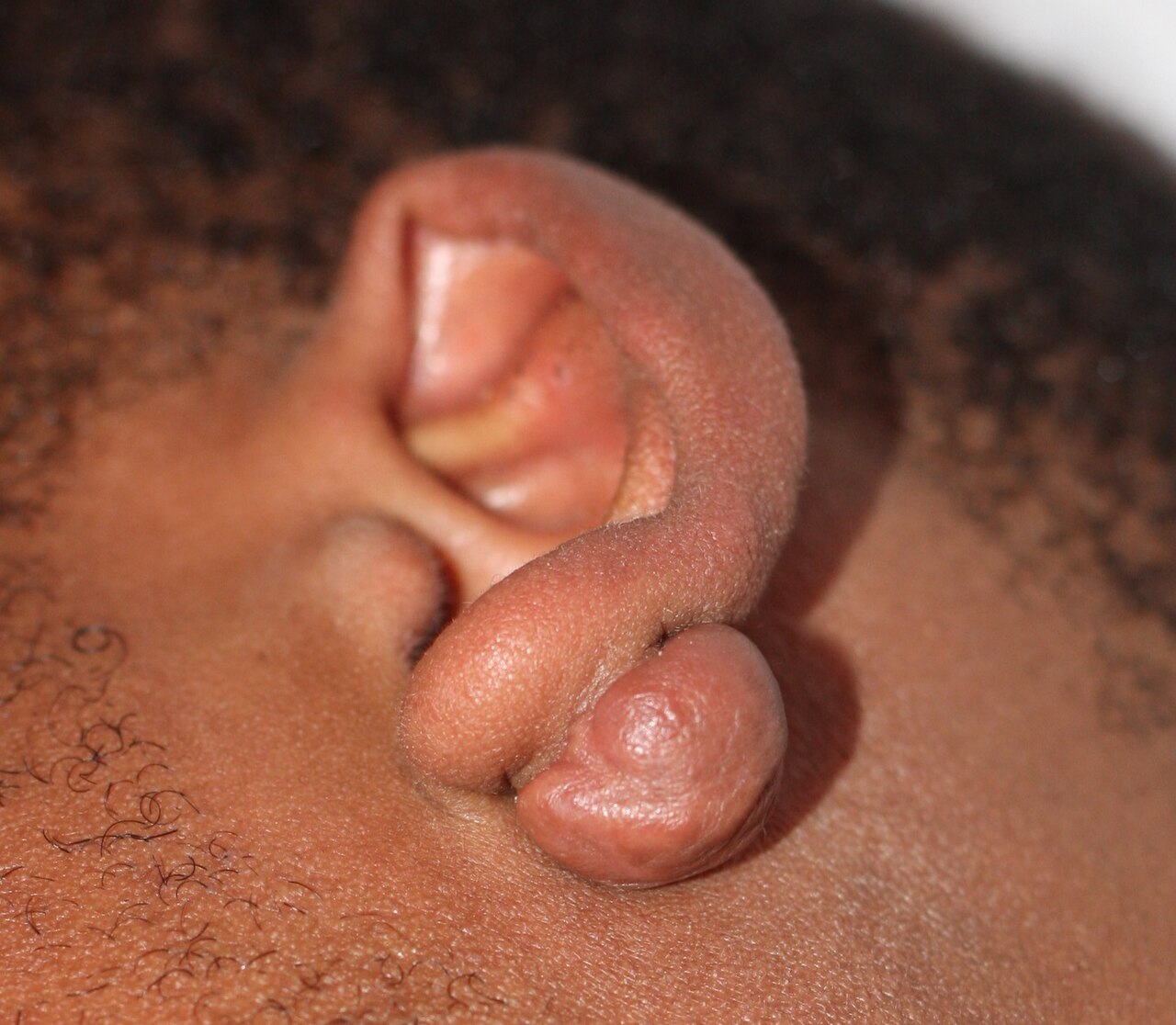
Earlobe keloids after ear piercing are among the most common keloids in darker skin. Photo: Htirgan, CC BY-SA 3.0, via Wikimedia Commons.
It often starts with something small: a new ear piercing, a spot on the chest, a vaccination or a surgical cut. The wound heals, but instead of fading, the scar keeps growing, firm, shiny and raised, and it may itch or hurt. For many people in Kampala and Juba this is a familiar story, because keloids are much more common in darker skin.
The most common question is simple: can it be removed, and will it come back? Many people have had a keloid cut off, only to see it return larger than before.
This guide explains why keloids form, how to tell them from ordinary raised scars, what treatments are used and why they often return. It also covers prevention, because preventing a new keloid is far easier than treating one.
What a keloid is, and why it forms
When skin is injured, cells called fibroblasts lay down collagen, the protein that forms scar tissue. In normal healing, they slow down once the wound is closed. In a keloid, they keep going. The scar grows beyond the edges of the original wound into healthy skin, and it can keep growing for months or years.
A keloid is an overgrowth of scar tissue at the site of an injury. On darker skin, keloids are often darker brown than the surrounding skin, though new ones can look pink, reddish or purple.
Why some people get them
- Genetics: keloids run in families and are far more common in people of African descent.
- Age: they most often start between about 10 and 30 years of age.
- Hormones: they can appear or grow during puberty and pregnancy.
- Location: earlobes, the chest, shoulders, upper back and jawline are the most common sites, partly because skin there is under tension.
Common triggers
Almost any break in the skin can trigger a keloid in someone who is prone to them, including:
- Ear piercing, on the lobe or the upper ear
- Acne, especially on the chest, back and jaw
- Surgery, including caesarean section scars
- Burns
- Vaccinations, particularly on the upper arm, shoulder or chest
- Tattoos, insect bites, chickenpox and traditional skin cuts
Some keloids, especially on the chest, appear after an injury so minor it went unnoticed. A related condition, acne keloidalis nuchae, causes firm bumps at the back of the neck after close haircuts, mostly in men of African descent, and also needs a doctor’s care.
Keloid or hypertrophic scar?
Not every raised scar is a keloid. A hypertrophic scar is also thick and raised, but it behaves differently, and the difference affects treatment.
| Feature | Keloid | Hypertrophic Scar |
|---|---|---|
| Size | Grows beyond the edges of the original wound | Stays within the edges of the wound |
| When it appears | Can appear months after the injury | Usually within weeks of the injury |
| Over time | Can keep growing; rarely shrinks by itself | Often flattens gradually over a year or two |
| Common sites | Earlobes, chest, shoulders, upper back, jaw | Anywhere, often across joints or after burns |
| After removal | Often comes back if cut out alone | Less likely to come back |
| Who gets it | Strong family and ethnic tendency | Anyone, often after infection or wound tension |
In short, a hypertrophic scar is raised but stays within the boundary of the injury; a keloid grows beyond it.
How keloids are treated, and what “removal” really means
No single treatment works for everyone. Doctors usually combine treatments to flatten the keloid, ease itching and pain, and keep it from growing back.
Steroid injections
Injections of a corticosteroid such as triamcinolone directly into the keloid are the first-line treatment. They are usually repeated every 4–6 weeks over several sessions. Possible side effects include thinning of the skin, visible small blood vessels and lighter patches, which show more on dark skin, so doses are adjusted carefully. At Refine in Kampala, a triamcinolone injection starts from US$80; your exact cost is confirmed at consultation.
Silicone gel or sheets
Silicone applied daily for several months can soften and flatten scars. It is most useful for prevention and for small, early keloids.
Pressure
Firm, steady pressure discourages scar growth. Pressure earrings, worn for many hours a day for months, are often used after an earlobe keloid is removed.
Cryotherapy
Freezing the keloid with liquid nitrogen can shrink smaller keloids, often alongside injections. It can leave lighter patches, which is an important consideration on dark skin.
5-fluorouracil (5-FU)
This anti-scarring medicine can be injected, often mixed with a steroid, for keloids that do not respond to steroids alone. It is not used in pregnancy or while breastfeeding.
Surgery
Cutting a keloid out on its own often fails: studies report that anywhere from about 45% to all of the keloids treated this way come back, sometimes larger. For that reason, excision should be combined with other treatment: steroid injections into the wound, pressure, silicone and, in some specialist centres, low-dose radiotherapy.
Laser
Lasers can reduce redness, smooth texture and help injected medicine penetrate. Used alone, an aggressive laser can irritate a keloid and trigger regrowth, so laser is used carefully, as part of a combined plan, with pigment-safe settings on darker skin. At Refine, fractional CO2 laser is one of the treatments we use for keloid scars, and your doctor will decide whether laser has a place in your plan. At Refine in Kampala, CO2 laser starts from US$350 for a small area; your exact cost is confirmed at consultation.
Preventing keloids if you are prone to them
- Avoid unnecessary skin injury. Think carefully about new piercings, especially on the upper ear, and tattoos.
- Treat acne early, before it can leave keloids on the chest, back or jaw, and treat any new keloid early: small, new keloids respond better than large, old ones.
- Tell every doctor and surgeon that you form keloids before any procedure. Preventive steps, such as silicone once the wound closes and early injections, can be planned.
- Never skip a vaccine. Ask whether it can be given in a lower-risk site, and watch the area afterwards.
- Protect scars from the sun. Strong equatorial sun can darken healing scars, and dark marks (post-inflammatory hyperpigmentation) are common on darker skin.
- Avoid home remedies that damage skin. Do not cut, burn or tie off a keloid with thread, and do not apply strong steroid creams such as clobetasol or bleaching creams without a doctor’s advice.
When to see a specialist at Refine
At Refine, scars are treated by the team led by Dr Chirag Kotecha, Aesthetic Physician. Your consultation covers how and when the keloid started, whether it is growing, itching or painful, any family history and previous treatments. The doctor will examine it, confirm whether it is a keloid or a hypertrophic scar, and plan a combined treatment with realistic expectations. If surgery is considered, our Plastic Surgeon, Dr William Lubega, offers scar reconstruction as part of our plastic surgery service.
See a doctor promptly if a scar or lump:
- grows quickly
- bleeds, breaks open or forms a sore
- becomes newly painful
- appeared without any injury, or looks different from your other scars
Rarely, other skin growths can look like a keloid, so a doctor may take a small sample (a biopsy) to be sure.
Refine Skin & Body Clinic has three branches in Kampala: Lugogo (Forest Mall), Kabalagala (Palm Village Mall) and Bukoto (UMC Victoria Hospital Annex). In South Sudan, Refine Skin & Body Centre is on Airport Road in Juba. Book a consultation online.
Frequently asked questions
Can a keloid be removed for good?
Direct answer: A keloid can be flattened or cut out, but keloids often come back, so no treatment can promise it will stay away. Combining treatments, such as surgery followed by steroid injections and pressure, lowers the chance of return. Follow-up for months or years helps catch regrowth early.
Why do keloids come back after surgery?
Direct answer: Cutting out a keloid creates a new wound, and skin that forms keloids tends to over-repair that wound too. That is why surgery alone has a high recurrence rate. Adding injections, pressure or other treatment after surgery reduces the risk.
Do keloid injections hurt?
Direct answer: They sting, because keloid tissue is firm, but they are quick and usually tolerable. As the keloid softens over a course of injections, later ones tend to be easier.
Can I pierce my ears again after an earlobe keloid?
Direct answer: It is generally advised against, because a new piercing carries a high risk of another keloid. If you are considering it, talk to a doctor first. Clip-on earrings are a safer alternative.
Are keloids dangerous?
Direct answer: Keloids are not a cancer, but they can itch, hurt, limit movement and affect confidence. A scar or lump that grows fast, bleeds or looks unusual should be checked by a doctor.
Do home remedies work on keloids?
Direct answer: There is little good evidence that oils or herbal pastes shrink keloids. Cutting, burning or tying off a keloid at home can cause infection and a larger keloid. See a doctor instead.
The bottom line
Keloids form because keloid-prone skin keeps making scar tissue after a wound has healed, and they are common in people of African descent. They can often be flattened and controlled, usually with steroid injections combined with other treatments, but recurrence is common and no one can promise a keloid will not return. Cutting one out on its own is rarely the answer. If you have a keloid, or you know you form them and need a procedure, book a consultation at Refine for an honest plan.
Get an Honest, Combined Keloid Plan
Whether you need targeted steroid injections, laser softening or coordinated surgical reconstruction, our specialists at Refine Skin & Body Clinic in Kampala and Juba will guide you safely.