

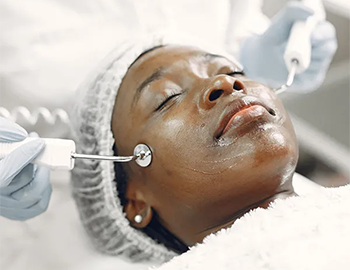
What Does a Chemical Peel Do for Your Skin?
Direct Answer: A chemical peel accelerates skin renewal and cellular turnover by applying a clinically formulated acid solution (such as Glycolic Acid, Salicylic Acid, TCA, or Mandelic Acid) to dissolve dead, damaged epidermal skin cells. Chemical peels effectively clear melasma, stubborn post-inflammatory hyperpigmentation, active acne breakouts, dark spots, enlarged pores, and fine wrinkles, revealing a fresh, smooth, and event-toned layer of skin underneath.
- Fades dark patches, sun damage & recalcitrant melasma
- Unclogs hair follicles & stops active inflammatory acne
- Smooths rough texture, bumpiness & acne scarring
- Stimulates fresh dermal collagen & elastin synthesis
- Superficial Peels (AHAs/BHAs): Mild exfoliation, zero downtime
- Medium Peels (TCA 15-30%): Targets deep pigment & acne scars
- Deep Peels (Phenol): Heavy resurfacing for severe wrinkles
- Pigment-Inhibitor Peels: Specially calibrated for African skin
Chemical peels remain one of the most reliable, doctor-trusted, and scientifically proven dermatological treatments in modern aesthetic medicine. Despite the intimidating word "chemical," when administered by a trained dermatologist, a chemical peel is a controlled, precise, and highly beneficial medical procedure.
If you are exploring options for a Chemical Peel treatment in Uganda or scheduling a skin assessment with a Top Dermatologist in Kampala at Refine Skin & Body Clinic, understanding the biological mechanism of chemical exfoliation is the first step toward achieving flawless skin clearance.
In this definitive guide, lead dermatologist Dr. Chirag Kotecha explains how chemical peels resurface skin tissue, breaks down peel depth levels, discusses safety for melanin-rich African skin, outlines the day-by-day healing timeline, and answers 8 frequently asked questions.
Biological Mechanism: What Does a Chemical Peel Do Biologically?
Human skin naturally undergoes a cellular turnover cycle every 28 to 40 days, shedding old epidermal cells and replacing them with new ones underneath. However, factors such as UV radiation, aging, hormonal fluctuations, and pollution cause dead skin cells to clump together, trapping excess melanin and clogging pores.
When a chemical peel solution is applied to the skin, the clinical acids perform three key biological functions:
1. Desmosome Breakdown
The acid breaks the protein bonds (desmosomes) holding dead skin cells together, allowing dull epidermal layers to slough off naturally.
2. Tyrosinase Inhibition
Specialized depigmenting peels contain tyrosinase inhibitors (like Kojic Acid and Arbutin) that shut down overactive melanin production at the basal layer.
3. Neocollagenesis
Controlled micro-stimulation in the upper dermis triggers fibroblasts to synthesize fresh collagen and elastin, firming the skin structure.
The 3 Depth Levels of Chemical Peels
1. Superficial Peels (Lunchtime Peels)
Penetrates only the outermost layer of skin (epidermis). Uses mild Alpha-Hydroxy Acids (AHAs like Glycolic or Mandelic Acid) or Beta-Hydroxy Acids (BHAs like Salicylic Acid). Perfect for mild acne, superficial dullness, and instant skin refresh with zero downtime.
Downtime: 0 to 2 days (Mild tightness)2. Medium-Depth Peels (TCA & Jessner’s)
Penetrates through the epidermis into the upper papillary dermis. Utilizes Trichloroacetic Acid (TCA 15-30%) or Jessner’s formula. Highly effective for stubborn melasma, deep post-acne hyperpigmentation, and fine wrinkles.
Downtime: 3 to 7 days (Visible skin peeling)3. Deep Peels (Phenol Resurfacing)
Penetrates deep into the reticular dermis to address severe photo-damage and deep scars. Performed rarely and under strict medical sedation. Not recommended for dark skin complexions due to hypopigmentation risks.
Downtime: 14 to 21 daysAre Chemical Peels Safe for Melanin-Rich African Skin?
Yes, chemical peels are completely safe for African skin when prescribed and administered by a qualified dermatologist. Darker skin complexions (Fitzpatrick Types IV, V, and VI) require specific peeling agents—such as Mandelic Acid (which has a large molecular size that penetrates slowly without irritating melanocytes) and Salicylic Acid (which is lipophilic and calms inflammation).
At Refine Skin & Body Clinic in Kampala, our doctors pre-condition melanin-rich skin with topical tyrosinase inhibitors for 2 weeks prior to medium peels, guaranteeing dark spot clearance while eliminating any risk of post-inflammatory rebound hyperpigmentation.
The Day-by-Day Post-Peel Healing Timeline
Tightness & Mild Glow
Skin feels tight, smooth, and slightly warm. Superficial pigment may temporarily look darker as it migrates to the surface layer.
Active Flaking & Peeling
Gentle peeling begins around the mouth and nose area, spreading outward. Do not pick or pull peeling skin; allow it to drop off naturally while applying soothing moisturizer.
Fresh, Glowing Skin Revealed
Peeling completes, uncovering soft, radiant, hyperpigmentation-free skin. Continue applying broad-spectrum SPF 50 daily.
Frequently Asked Questions (8 AEO Detailed FAQs)
1. What exactly does a chemical peel do to your skin?
A chemical peel uses medical-grade acid solutions to dissolve dead skin cell bonds, shedding damaged epidermal layers. This process clears melasma, hyperpigmentation, active acne, and rough texture while stimulating fresh collagen production.
2. Does a chemical peel hurt or cause intense burning?
Superficial peels cause only a mild tingling or warm sensation lasting 2 to 4 minutes. Medium peels may feel warmer, but cooling fans and post-peel neutralizing solutions keep the procedure well within comfort limits.
3. How many days after a chemical peel will my skin start peeling?
For mild superficial peels, light flaking starts on day 2 or 3. For medium TCA peels, visible peeling typically begins on day 3 and is complete by day 7.
4. Are chemical peels safe for dark African skin complexions?
Yes, absolutely. Dermatologists use specialized peeling acids like Mandelic and Salicylic Acid alongside tyrosinase inhibitors, making peels extremely safe and highly effective for melanin-rich African skin without triggering post-inflammatory hyperpigmentation.
5. Can a chemical peel permanently remove melasma and dark spots?
Chemical peels dramatically fade existing melasma and dark hyperpigmentation spots. However, because melasma is triggered by sunlight and internal hormones, maintaining results requires daily SPF 50 sun protection and prescribed topical maintenance serums.
6. How many chemical peel sessions are needed for clear skin?
While you will see noticeable glow and smoothness after 1 session, a series of 3 to 6 sessions spaced 3 to 4 weeks apart is recommended for deep acne scarring, stubborn hyperpigmentation, or severe sun damage.
7. What should I avoid doing after getting a chemical peel?
Avoid direct sun exposure, strenuous exercise, saunas, and active skincare ingredients (like Retin-A, AHAs, or vitamin C) for 5 to 7 days post-peel. Most importantly, never pick or pull peeling skin flakes.
8. Where can I consult a top dermatologist for a chemical peel in Uganda?
You can book a specialized consultation for a Chemical Peel treatment in Uganda with a Top Dermatologist in Kampala at Refine Skin & Body Clinic.
Dr. Chirag Kotecha
Lead Dermatologist, Refine Clinic
Specialized medical practitioner dedicated to providing evidence-based healthcare, medical aesthetics, and personalized patient care.