Pigmentaion & Melasma Treatment in Kampala

malesma treatment

Hyperpigmentation / Melasma Treatment

A small amount of pigmentation keeps happening and the skin also reverts back to normal after a time but if the pigmentation keep increasing both in the size or the number of spots or keeps darkening further- this may be a cause of concern called Hyperpigmentation.
At Refine Skin And Body Clinic, our team of trained doctors have devised multitudes of US-FDA and European-CE Approved treatments to treat your pigmentation concerns in the most effective way.

  • Pigmentation is common and a usually harmless condition in which certain patches of the skin become darker in color as against the remaining. This darkening in color occurs mainly due to excess melanin deposition.
    A small amount of pigmentation keeps happening and the skin also reverts back to normal after a time but if the pigmentation keeps increasing both in the size or the number of spots or keeps darkening further- this may be a cause of concern called Hyperpigmentation.

  • Hyperpigmentation is more of a concern on the aesthetic level.

What are the causes of Pigmentation?
  • The causes of pigmentation are varied and mostly the routine types which implies that a little bit of care here and there can save our skin from pigmentation and hyperpigmentation.

  • Damage due to the Sun: MThe most common cause of pigmentation or Melasma is the sun damage. The damage thus caused is usually recurring and is cyclical in nature. This is because the UV-A and UV-B rays in the sun speed up melanin production in the skin. This melanin then has a tendency to absorb additional UV-Aand UV-B. This process causes inflammation within the skin. The immediate effects of the damage are negligible enough but over a time, they start showing up as tan patches.

  • Skin Cuts and Bruises: ometimes things as simple as a minor cut or a pimple popping act can result in pigmentation. This is because, as a respiratory response, the skin produces melanocytes which produce melanin at the affected site and hence causes pigmentation.

  • Allergic reactions: To certain external factors or certain medications (such as retinoids, anti-seizure drugs, hormonal medications, non-steroidal drugs etc.) can also cause pigmentation of the skin

  • Hormonal changes: Especially around the time of menopause are another major cause for pigmentation. Also, some women experience excessive pigmentation during pregnancy due to excess production of the hormones estrogen and progesterone.

  • Genetics: Lastly, some people have it in their genes that their melanin production and hence deposition would be more than normal and hence heredity becomes another cause of pigmentation.
pigmentaion Treatment
Prevention of Pigmentation:
  • Melanin production and deposition is a response of the internal systems against external stimuli and as such no cure for the same has been developed. However, there are few precautions that can be taken in order to restrict the probable deposition to minimum:

    1. The first and most basic preventive measure lies in the use of broad spectrum sunscreens. By broad spectrum we mean that the sunscreen should be effective against both UV-A and UV-B with an SPF of 35 or more. Also, Sunscreens shouldn’t be used only when out in the sun. The UV rays are always present in the atmosphere hence, even though it is rainy or you are inside your house, sunscreens should be worn.
    2. Be mindful of the allergies or slight irritations that any of the make-up product is causing you. Even a slight itch should be a reason enough to discontinue the use.
    3. For ladies who are taking pills for birth control, one of the side effects can be melasma. The ideal solution would be to look for alternative methods of control and stop usage of birth control pills. Also, various skin lightening creams containing Hydroquinone with either of Tretinoin
pigmentation Treatment
Types of Pigmentation:
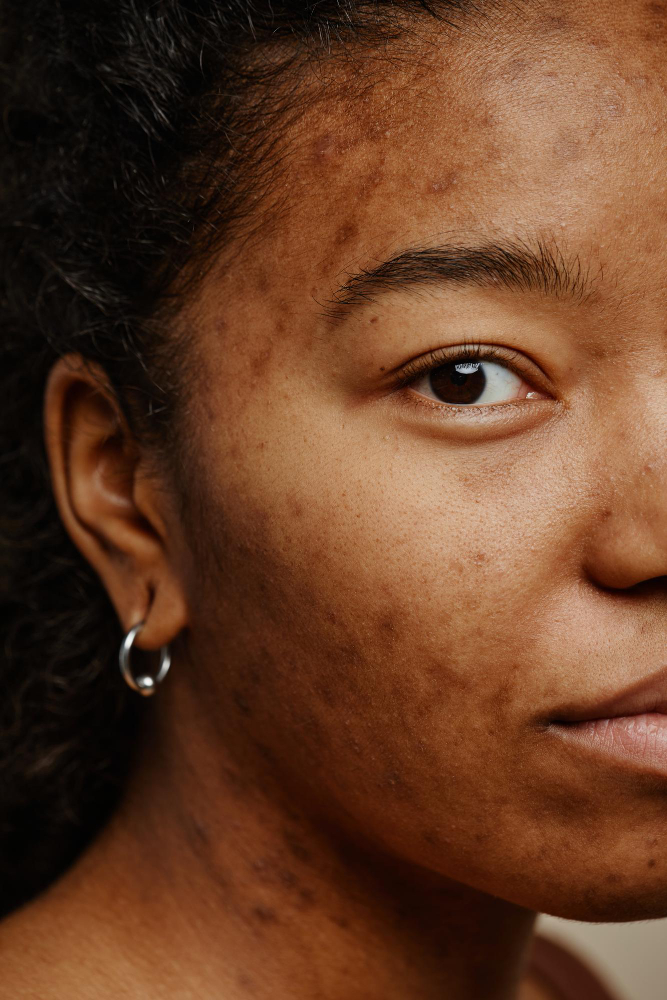
  • Melasma: Melasma is a skin condition presenting as brown patches on the face of adults. Both sides of the face are usually affected. The most common sites of involvement are the cheeks, bridge of nose, forehead, and upper lip.

  • Refine Skin And Body Clinic offers dedicated and advanced treatments for acne scars with numerous laser options ranging from Erbium Glass, Co2 Fractional, Erbium Pixel, MicroNeedling, Fractional Radiofrequency, RevLite, ClearScar, ClearSkin, ClearLift and LED.

  • Who Does it Affect?

    1. Melasma mostly occurs in women. Only 10% of those affected are men. Dark-skinned races, particularly Hispanics, Asians, Indians, people from the Middle East, and Northern Africa, tend to have melasma more than others.
    2. Melasma is thought to be the stimulation of melanocytes or pigment-producing cells by the female sex hormones estrogen and progesterone to produce more melanin pigments when the skin is exposed to the sun.
    3. Women with a brown skin type who are living in regions with intense sun exposure are particularly susceptible to develop this condition.
    4. People with a family history of melasma are more likely to develop melasma themselves.
    5. Birth control pills may also cause melasma.
    6. A change in hormonal status may trigger melasma. It is commonly associated with pregnancy and called Chloasma or the “mask of pregnancy.” Melasma may disappear after pregnancy; it may remain for many years, or a lifetime.
    7. Sun exposure contributes to melasma. Ultraviolet light from the sun, and even very strong light from light bulbs, can stimulate pigment-producing cells, or melanocytes in the skin. People with skin of color have more active melanocytes than those with light skin. These melanocytes produce a large amount of pigment under normal conditions, but this production increases even further when stimulated by light exposure or an increase in hormone levels. Incidental exposure to the sun is mainly the reason for recurrences of melasma.
    8. It may also be noticed in apparently healthy, normal, non-pregnant women where it is presumed to be due to some mild and harmless hormonal imbalance.
    9. Any irritation of the skin may cause an increase in pigmentation in dark-skinned individuals, which may also worsen melasma. Melasma is not associated with any internal diseases or organ malfunction.
  • How is Melasma diagnosed? Because melasma is common and has a characteristic appearance on the face, most patients can be diagnosed simply by a skin examination with a Woods lamp. Occasionally a skin biopsy is necessary to differentiate melasma from other conditions.

  • Melasma Treatment: While there is no cure for melasma, many melasma treatments have been developed.

    1. Sunscreens are essential in the treatment of melasma. They should be broad spectrum, protecting against both UVA and UVB rays from the sun. An SPF 25 or higher should be selected.
    2. In addition, Antioxidant solutions, physical sunblock lotions, and creams may be used to block ultraviolet radiation and visible light are one solution to melasma treatment. Sunscreens should be worn daily, whether or not it is sunny outside, or if you are outdoors or indoors. A significant amount of ultraviolet rays is received while walking down the street, driving in cars, and sitting next to windows.
    3. Any facial cleansers, creams, or make-up which irritates the skin should be stopped, as this may worsen melasma.
    4. If melasma develops after starting birth control pills, it may improve after discontinuing them.
    5. It cab be treated with skin lightening creams while continuing the birth control pills. A variety of creams are available for the treatment of melasma. These creams do not “bleach” the skin by destroying the melanocytes, but rather, decrease the activity of these pigment-producing cells. Typically, these creams contain Hydroquinone, which inhibits the formation of new pigment. Bleaching creams must be applied for at least 6 months to obtain a worthwhile lightening of pigmentation.
    6. Creams containing Tretinoin and Glycolic Acid are used in combination with hydroquinone to enhance the depigmenting effect.
    7. Chemical peels and laser surgery with potent lasers such as the Institute laser (Q switched Nd YAG laser) may help melasma, but results have not been consistent. These procedures have the potential of causing irritation, which can sometimes worsen melasma. Generally, they should only be used by a dermatologist in conjunction with a proper regimen of bleaching creams and prescription creams tailored to your skin type.

Quality and Excellence

Why Choose Dr. Chirag Kotecha for Alopecia Areata? in Kampala?

  • Unrivalled Experience: Years of treating diverse Alopecia Areata cases.

  • Patient-Centric Approach: Holistic care focuses on both physical and emotional well-being.

  • Latest Techniques: Staying updated with groundbreaking research and methods.

  • Warm and Welcoming Clinic: Ensuring a comfortable experience at Refine Skin and Body.

Dr.Chirag Kotecha
Contact Us

Questions, feedback, or inquiries? Contact us now we're just a message or call away!

Ugandan Branches
Phone : +256-205-111-222
Juba Branch
Phone : +211-922-687-111
Public Holidays

We are closed on all National Religious Holidays and New Years Day. For other National Public Holidays, we are open for limited hours. Please check our social media platforms for confirmations.

Contact Now
pricing-image
Opening Hours:

Visit us during our flexible clinic hours for convenient access to exceptional care and personalized treatments.

Forest Mall Branch:

  • Mon,Wed & Fri: 09:00 AM - 06:00 PM

  • Tue & Thu – 10:00 AM - 07:00 PM

  • Saturday – 09:00 AM - 05:00 PM

  • Sunday – 11:00 AM - 02:00 PM

Kabalagala & Bukoto Branches:

  • Mon - Sat: 10:00 AM - 06:00 PM

  • Sunday: Closed

Testimonials

What Our Patient Says

The dermatology care I received was outstanding. The team was knowledgeable, compassionate, and helped me achieve healthier skin.