

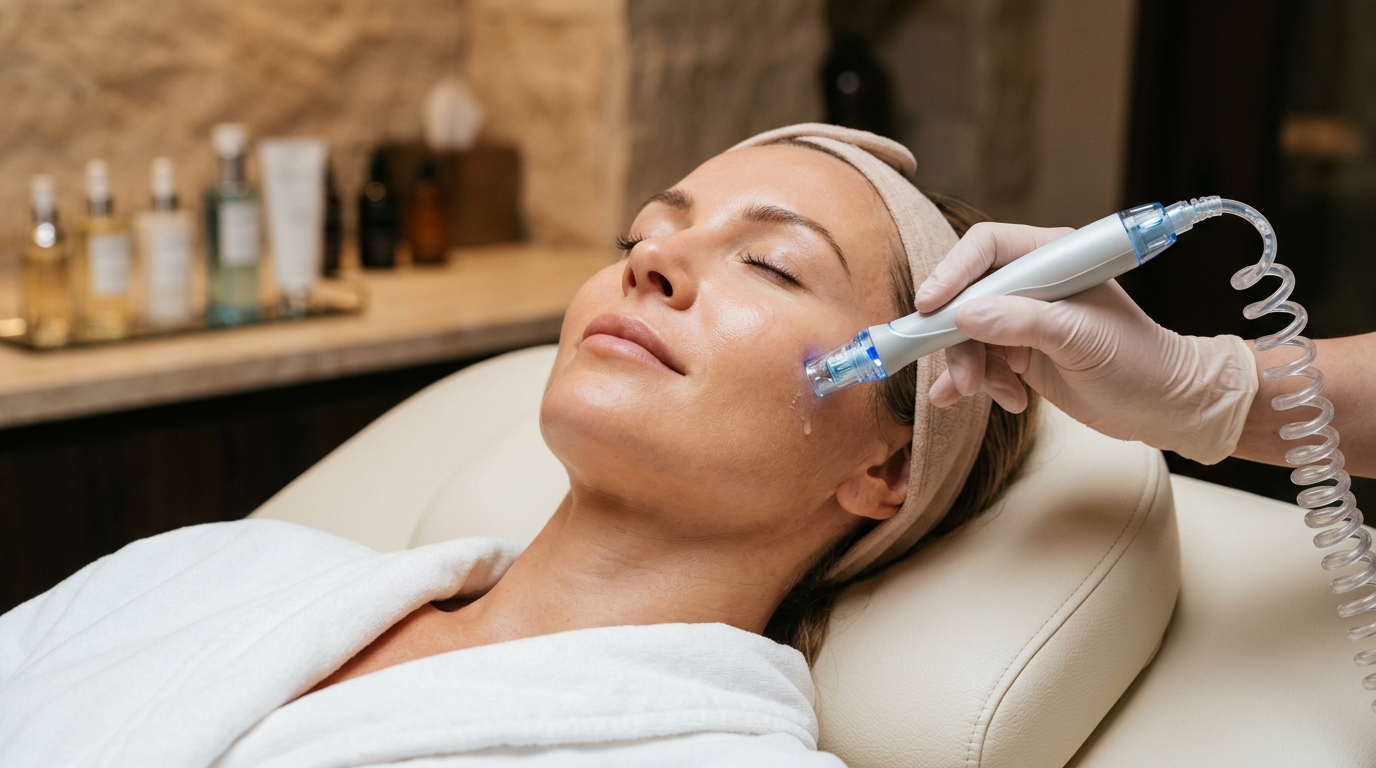
Does HydraFacial Remove Facial Hair?
Direct Answer: No, a standard HydraFacial does not remove facial hair, peach fuzz, or beard stubble. HydraFacial uses patented Vortex-Fusion suction technology designed specifically to exfoliate dead surface cells, extract congested sebum and blackheads, and infuse nourishing serums into pores—not pull or shave hair follicles. However, pairing a HydraFacial with dermaplaning right beforehand provides the ultimate combination for both hair removal and intense dermal hydration.
Deep pore extraction, cellular exfoliation, and antioxidant hydration.
Leaves vellus hair intact while thoroughly cleaning around hair follicles.
Dermaplaning + HydraFacial (Dermaglow) for total fuzz removal & glass skin.
HydraFacial has rapidly grown into one of the most beloved non-invasive clinical skincare treatments across the globe. Known for delivering an immediate "red carpet glow" without redness, peeling, or downtime, this multi-step facial is celebrated for transforming dull, congested skin into a smooth, radiant canvas.
Yet, because skin feels so baby-soft, smooth, and refreshed immediately following a session, many first-time patients frequently ask an important practical question: Does HydraFacial remove facial hair?
If you are planning to book an authentic medical-grade Hydrafacial in Uganda, understanding exactly how the procedure interacts with facial hair, peach fuzz, and beard stubble will help you plan your appointments and achieve the best possible aesthetic outcome. At Refine Skin & Body Clinic in Kampala, our cosmetic specialists guide you through the clinical facts, explain why hair stays in place, and share the best treatment pairings to safely banish unwanted facial fuzz.
How a HydraFacial Works: The Vortex-Fusion Mechanism
To understand why HydraFacials do not remove hair, it helps to look at what the technology actually does to your skin. Unlike manual extractions, abrasive microdermabrasion crystals, or chemical peeling solutions, a HydraFacial relies on a specialized handpiece equipped with spiral hydropeel tips and patented Vortex-Fusion fluid mechanics.
A classic HydraFacial session is structured into three essential medical phases:
- Cleanse & Peel (Gentle Exfoliation): The treatment begins by bathing the skin in a nourishing lactic acid and glucosamine solution. This softens the outer layer of dead stratum corneum cells, lifting microscopic grime without scratching the skin surface.
- Extract & Hydrate (Pore Decongestion): Next, a mild blend of salicylic and glycolic acids loosens stubborn debris tucked deep inside the sebaceous follicles. A gentle, pneumatic spiral suction vacuum effortlessly clears pores. If you have ever wondered about blackheads, our clinical specialists extract stubborn blackheads quickly and comfortably during this exact stage.
- Fuse & Protect (Targeted Infusion): In the final step, the device saturates the dermal surface with potent antioxidants, hyaluronic acid, and rejuvenating peptides to lock in moisture, calm the skin barrier, and restore a dewy, luminous finish.
Notice what is missing from this equation: there are no blades, no hot waxes, no tweezers, and no thermal lasers targeting melanin inside hair roots. The vacuum suction is calibrated exclusively to clear viscous sebum and microscopic debris—it does not possess the mechanical tension or physical grip necessary to dislodge anchored hair shafts from their follicles.
Vellus Hair vs. Terminal Hair: What Happens During Treatment?
Human facial skin features two fundamentally different classes of hair:
-
1. Vellus Hair (Peach Fuzz): These are the soft, translucent, ultra-fine hairs that cover the cheeks, temples, jawline, and forehead. According to dermatological anatomical definitions of fine vellus hair, these strands lack significant pigment and serve a protective biological role by regulating body temperature and facilitating sweat evaporation.
-
2. Terminal Hair (Coarse Facial Hair): These are thicker, deeply rooted, pigmented hairs found in eyebrows, eyelashes, upper lip, chin, and male beard areas.
During a HydraFacial session, the spiral vacuum tip glides effortlessly over both vellus and terminal hairs. Because hair follicles are anchored deep in the dermis, the suction glides past them without pulling, plucking, or thinning the strands. When you look in the mirror after your session, your peach fuzz will still be intact.
Why Does Skin Feel So Hair-Free After a HydraFacial?
If HydraFacial does not remove facial hair, why do so many clients insist that their peach fuzz feels invisible or vanished after treatment? This common sensation is known as the exfoliation illusion, caused by several distinct physiological factors:
Elimination of Rough Cellular Buildup
Layers of dead, keratinized skin cells normally cling around the base of each tiny hair shaft, making peach fuzz feel stiff, coarse, and textured to the touch. By dissolving this crust, the hairs lay completely flat against softened, supple skin.
Deep Dermal Plumping
Intense infusion of low-molecular-weight hyaluronic acid inflates dehydrated skin cells like water balloons. As the epidermis plumps, the microscopic spaces between hair follicles tighten, creating an uninterrupted glassy glide.
Cleansing Follicular Collars
Microscopic plugs of oxidized oil and makeup residue collect inside follicular openings. Cleansing these collars eliminates the microscopic bumps that fingers often mistake for prickly hairs.
Optimal Light Reflection
When facial skin is flawlessly smooth and polished, light bounces cleanly off the surface rather than catching on angled peach fuzz, rendering fine hairs visually imperceptible in normal daylight.
The Ultimate Combination: Dermaplaning + HydraFacial
What if your goal is to eliminate facial hair and experience the revitalizing hydration of a HydraFacial? In modern clinical aesthetics, the premier solution is combining dermaplaning with HydraFacial—a synergistic protocol frequently called the "Dermaglow Treatment."
In this multi-modality treatment, a trained aesthetic practitioner uses a sterile surgical-grade scalpel held at a 45-degree angle to gently scrape away the top layer of dead stratum corneum cells alongside 100% of visible peach fuzz.
Performing dermaplaning immediately before your HydraFacial unlocks major benefits:
-
Deeper Serum Penetration: Peach fuzz and dead surface skin create a physical barrier. Removing this barrier allows the HydraFacial vortex serums (salicylic acid, hyaluronic acid, and peptide boosters) to penetrate up to 60% deeper into living tissue.
-
Unmatched Glass-Skin Finish: The combined physical exfoliation of a surgical blade followed by fluid-based vacuum cleansing produces a baby-smooth texture that makes foundation and skincare apply like silk. To explore if this comprehensive protocol fits your routine, read our review of HydraFacial treatment benefits.
Comparing Facial Treatments: Hair Removal vs. Skin Health
To help you choose the right procedure for your personal skin and hair goals, review this direct clinical comparison:
| Treatment | Removes Peach Fuzz? | Removes Coarse Hair? | Primary Benefit | Downtime |
|---|---|---|---|---|
| HydraFacial | No | No | Pore clearing, deep hydration, and radiant glow | Zero Downtime |
| Dermaplaning | Yes (Complete) | Surface Shave | Removes peach fuzz and dead keratin layer | None (1–2 hrs mild pinkness) |
| Dermaplaning + HydraFacial | Yes (Complete) | Surface Shave | Fuzz removal + maximum vacuum hydration | Zero Downtime |
| Medical Laser Hair Removal | Only Pigmented Hairs | Yes (Permanent Reduction) | Destroys hair follicles at the root | 24–48 hours mild swelling |
Pairing HydraFacial with Laser Hair Removal
If you suffer from unwanted coarse facial hair—such as on the upper lip, chin, or sideburns—modern clinical laser hair removal is the medical gold standard for long-term reduction.
However, patients frequently wonder how to coordinate these two treatments safely without overstressing their skin barrier:
-
•
Option 1: HydraFacial First (Preferred Sequence): Receiving a HydraFacial 5 to 7 days before your laser session clears dead skin cells, sebum, and blackhead plugs. This allows laser beams to travel cleanly down into hair follicles with minimal surface energy scatter. At Refine Clinic, we specialize in safe facial lasers that protect melanin-rich skin.
-
•
Option 2: Laser Hair Removal First: If you receive your laser hair removal session first, dermatologists advise waiting at least 7 to 10 days before scheduling a HydraFacial. This gives laser-treated hair follicles sufficient time to cool down and recover from thermal energy before vacuum suction and mild exfoliating acids are applied.
Can Men with Beards Get a HydraFacial?
Absolutely! HydraFacials are exceptionally popular among male patients. While the treatment will not thin or remove your beard, it resolves some of the most common grooming challenges men face:
- Clearing Beard Dandruff (Seborrheic Dermatitis): The vortex suction vacuums away stubborn flakes of dead skin trapped underneath thick facial hair.
- Preventing Painful Ingrown Hairs: Salicylic acid gently unclogs blocked hair follicles, ensuring emerging stubble grows straight outward without curling beneath the skin.
- Customized Application: For men with full beards, the aesthetician works around the beard contours—focusing heavily on the forehead, temples, nose, and exposed upper cheeks, while applying calming infusions to the beard line.
Experience the Real HydraFacial Glow
Ready for purified pores, intensely hydrated skin, and an unmistakable natural glow? Book your clinical Hydrafacial in Uganda at Refine Skin & Body Clinic today.
Frequently Asked Questions (FAQs)
Here are straightforward, doctor-verified answers to common questions about HydraFacials, facial hair, and pre-treatment preparation:
1. Does HydraFacial remove peach fuzz or fine vellus hair?
No. HydraFacial does not remove peach fuzz or vellus hair. Its vortex vacuum suction and liquid exfoliating serums are formulated to remove dead skin cells and clear clogged pores, leaving fine facial hairs completely undisturbed.
2. Should I shave my face before getting a HydraFacial?
If you choose to shave, do so at least 24 to 48 hours before your appointment. Shaving immediately before a HydraFacial creates microscopic micro-tears in the skin barrier that can sting when mild glycolic and salicylic peel serums are applied.
3. Can I get dermaplaning and a HydraFacial at the same visit?
Yes! In fact, combining dermaplaning right before a HydraFacial is widely considered the ultimate aesthetic duo. Dermaplaning physically sweeps away all peach fuzz and surface dead skin, allowing the HydraFacial vacuum and serums to penetrate deeper with zero resistance.
4. Can I wax or thread my facial hair before a HydraFacial?
You should avoid waxing, threading, or using depilatory creams on your face for at least 48 to 72 hours before a HydraFacial. Waxing strips off outer epidermal layers and leaves hair follicles open and sensitized, which increases the risk of irritation from exfoliating acids.
5. Will a HydraFacial cause facial hair to grow back thicker or darker?
No. HydraFacial does not affect the internal structure, density, or biological growth cycle of hair follicles in any way. It is physiologically impossible for a facial treatment to turn fine vellus hair into coarse terminal hair.
6. How long should I wait between laser hair removal and a HydraFacial?
Dermatologists recommend waiting 7 to 10 days after a laser hair removal session before receiving a HydraFacial. This waiting period allows follicular inflammation to subside completely. Alternatively, you can have a HydraFacial 5 days prior to laser hair removal.
7. Is HydraFacial better than a chemical peel for people with facial hair?
Both offer distinctive benefits. A HydraFacial simultaneously cleanses and hydrates without visible shedding, making it very comfortable around facial hair. For individuals looking to correct deeper pigmentation or active acne, reviewing our guide on chemical peel frequency helps determine whether a peel or a HydraFacial aligns best with your treatment schedule.
8. Where can I book an authentic HydraFacial in Kampala?
You can receive an authentic, certified Hydrafacial in Uganda at Refine Skin & Body Clinic in Kampala. Our certified aestheticians utilize official medical-grade vortex technology, custom skin boosters, and optional dermaplaning add-ons for peerless results.
Conclusion: The Right Tool for the Right Job
So, does HydraFacial remove facial hair? In short: no, it is engineered for pore clarification, cellular exfoliation, and deep dermal hydration—not hair removal.
However, if you crave both hairless smoothness and breathtaking radiance, combining a HydraFacial with pre-treatment dermaplaning or a structured laser hair removal series gives you the best of all worlds. To discover your personalized skin transformation plan, schedule your consultation at Refine Skin & Body Clinic today.
Dr. Chirag Kotecha
Lead Specialist, Refine Clinic
Specialized medical practitioner dedicated to providing evidence-based healthcare, medical aesthetics, and personalized patient care.